
 (905) 906-7546
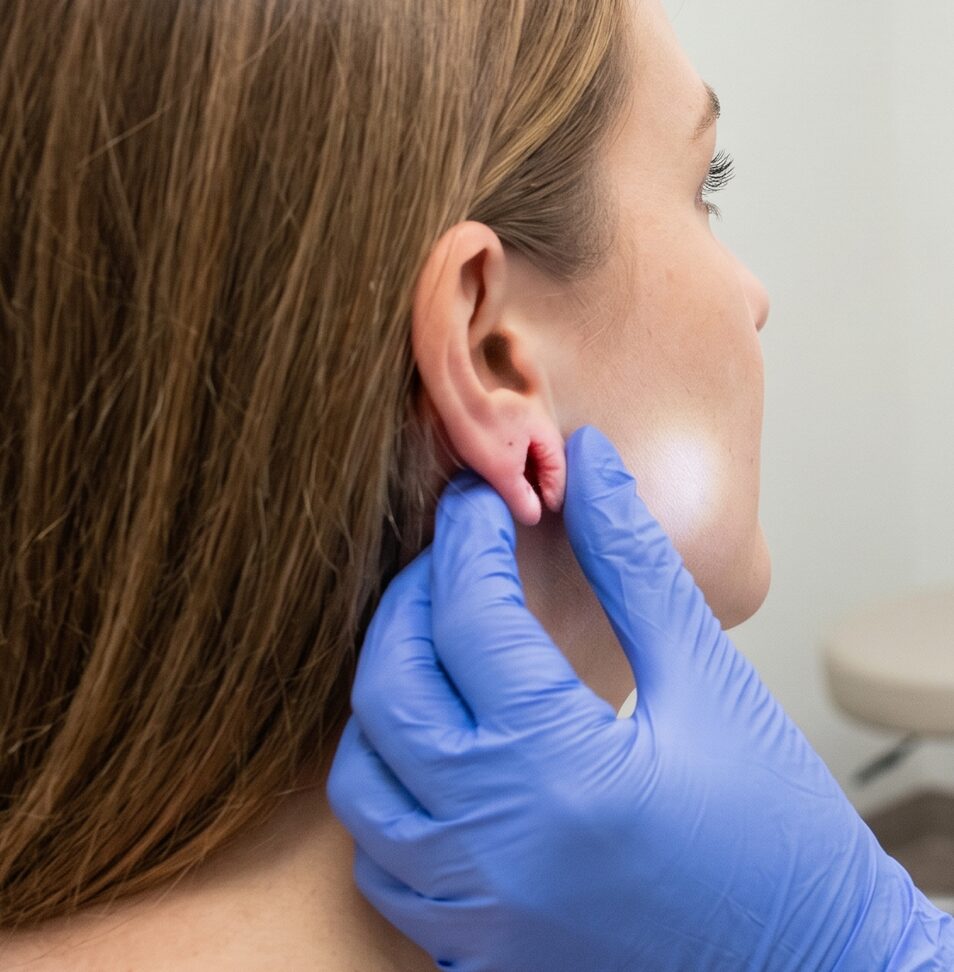
It is a common scenario: you are getting ready for an evening out, reach for your favourite pair of statement earrings, and realize your earlobe just cannot support the weight. Or perhaps a sudden tug from a child or a snag on a sweater has left you with a painful, visible tear. A split earlobe might seem like a minor cosmetic nuisance, but for many Canadians, it represents a loss of confidence and a break in the integrity of their skin.
At Mole Institute, we believe that every aspect of your skin health deserves professional attention. Whether your earlobe has stretched over years of wearing heavy jewelry or has suffered an acute trauma, understanding the “why” and “how” of repair is the first step toward restoration. We are here to guide you through the process with the same precision and care we apply to specialized mole monitoring.
Key Takeaways
- Causes vary: Split earlobes can result from sudden trauma or a “gradual cheese-cutter effect” from heavy earrings.
- Professional assessment is vital: A clinical evaluation ensures the tissue is healthy enough for a lasting repair.
- Simple procedure: Repair is typically a straightforward, in-office procedure with minimal downtime.
- Prevention matters: Learning how to support your lobes can prevent future recurrence.
- Regional accessibility: Expert care is available for residents across the Golden Horseshoe, from Burlington to Brantford.
What Causes a Split Earlobe?
The skin of the earlobe is unique. Unlike the rest of the ear, it contains no cartilage, consisting instead of a delicate mix of fat and connective tissue. This makes it soft and pliable, but also susceptible to damage.
Gradual Stretching
Most split earlobes don’t happen overnight. Often, it is the result of years of wearing heavy or “dangly” earrings. Over time, the weight of the jewelry pulls against the bottom of the piercing hole. Gravity and the thinning of the skin as we age can cause the hole to elongate into a slit, eventually pulling all the way through the bottom of the lobe. According to the Canadian Dermatology Association, skin elasticity naturally decreases over time, making older adults more prone to this type of tissue failure.
Acute Trauma
The second most common cause is accidental. A hoop earring getting caught in a brush, a persistent pet, or a curious toddler can cause a sudden, forceful tear. This type of injury requires immediate care to manage bleeding and ensure the wound heals cleanly before a formal repair is considered.
Why Professional Repair is Essential
While a split earlobe isn’t usually a medical emergency, it is a structural issue that the body cannot “knit” back together on its own in a way that looks natural. If left to heal without intervention, the edges of the split will skin over separately, leaving a permanent notch.
At Mole Institute, we view the skin as a sophisticated system. Just as we monitor moles to catch changes early, we look at earlobe repair as a way to restore the skin’s protective barrier and aesthetic harmony. Relying on professional expertise ensures that the blood supply to the area is preserved and that the resulting scar is as discreet as possible.
Research from the World Health Organization (WHO) emphasizes the importance of sterile environments for minor skin procedures to prevent secondary infections, which can be particularly stubborn in the ear area.
The Path to Restoration: What to Expect
The process of fixing a split earlobe is often much simpler than patients anticipate. Because we serve a wide community—including those living in Ancaster, Oakville, and Stoney Creek—we prioritize a streamlined, comfortable experience.
1. The Consultation
We begin by assessing the thickness of the earlobe and the nature of the split. We discuss your goals—whether you simply want the notch closed or hope to wear earrings again in the future. This personalized planning is at the core of our ethos.
2. The Procedure
Under local anesthesia, the healed skin along the “walls” of the split is gently removed. This creates “fresh” edges that can be precisely aligned and sutured back together. This technique ensures the lobe heals as one solid piece of tissue rather than two separate flaps.
3. Recovery and Aftercare
Recovery is typically quick. Most patients can return to their normal activities immediately, provided they avoid strenuous exercise for a few days. You will be given a specific cleaning regimen to ensure the site stays healthy.
Preventive Skin Health: Protecting Your Lobes
Just as we advocate for sun safety to prevent melanoma, we advocate for “jewelry safety” to protect your earlobes. The Public Health Agency of Canada (PHAC) often highlights the importance of injury prevention in maintaining overall well-being.
- Weight Management: Save heavy statement pieces for short durations rather than all-day wear.
- The “Sleep Rule”: Remove earrings before bed to prevent snagging on pillowcases or blankets.
- Support Patches: Consider using adhesive reinforcement patches on the back of the lobe to help distribute the weight of heavier jewelry.
- Mind the Tugs: Be extra cautious when changing clothes or handling small children while wearing hoops.
If you are a high-risk individual—perhaps someone with very thin skin or a history of poor wound healing—your monitoring schedule should include checks of all skin surfaces, including the ears.
Integrating Earlobe Health into Your Routine
At Mole Institute, we don’t just look at spots; we look at the person. A split earlobe can be a reminder of an accident or a sign of aging that you’d rather move past. By addressing it professionally, you are choosing “Detection and Correction, Not Just Observation.”
For those in the Greater Hamilton area, including our neighbours in Burlington and Brantford, accessing specialized care is local and convenient. We invite you to view our full range of Mole Institute Services to see how we can support your skin health journey.
Whether it is a suspicious mole or a torn earlobe, our commitment to clinical excellence and early intervention remains the same. The skin is your body’s largest organ and its first line of defence; let’s treat it with the respect it deserves.
Helpful Resources for Canadians
For more information on skin health and injury statistics in Canada, please visit these authoritative sources:
- Canadian Cancer Society – Information on skin changes and cancer prevention.
- Health Canada – Regulatory information on medical procedures and safety.
- Statistics Canada – Data on health trends across the provinces.
- Melanoma Network of Canada – Resources for high-risk groups and early detection.
Conclusion
A split earlobe is a common issue, but it doesn’t have to be a permanent one. Through professional repair and a proactive approach to skin health, you can restore both the function and appearance of your ears. Remember, your skin tells a story—let’s make sure it’s one of health, care, and confidence. If you’re noticing changes in your skin or have experienced an earlobe injury, reach out to a professional who treats skin health as a sophisticated system, not just a quick glance.