
 (905) 906-7546
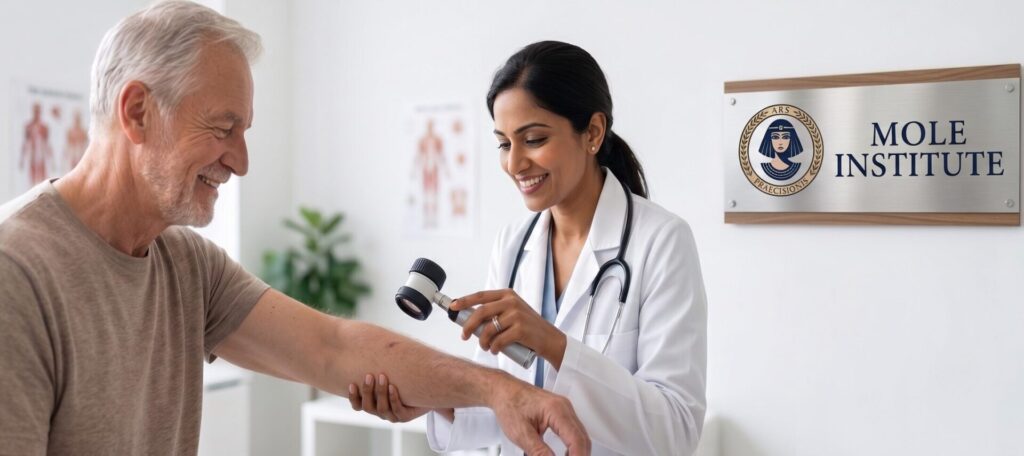
Professional Mole Removal in Hamilton
Mole removal is a quick, in-office dermatological procedure designed to completely excise bothersome or suspicious skin lesions. If you are seeking safe and expert care, the Mole Institute stands as a premier Hamilton clinic specializing in these precise minor surgical extractions. We proudly serve patients from across the entire region, including neighbouring communities like Ancaster, Dundas, and Stoney Creek, ensuring seamless access to high-quality minor surgical treatments without the stress of extensive hospital wait times.
When residents of Southern Ontario notice a changing skin spot or simply wish to address a cosmetic blemish, they require a reliable, direct-access medical facility. The Ontario Ministry of Health outlines strict guidelines for minor surgical procedures, and our dedicated clinic adheres to the absolute highest standards of patient safety, clinical excellence, and aesthetic outcomes. Bypassing long wait times is a significant advantage for our patients, allowing for immediate peace of mind and rapid treatment without requiring a formal referral from a primary care physician.
Understanding Skin Moles and How They Form
Before exploring the specific removal processes, it is incredibly helpful to understand what these common skin growths actually are from a biological standpoint. Moles, medically known as nevi, are concentrated clusters of pigmented cells called melanocytes. These specialized cells produce melanin, which is the natural pigment that gives human skin its specific colour. While most individuals are born with a few moles, many develop new ones during childhood, adolescence, and even well into adulthood due to cumulative sun exposure and inherent genetic factors. Resources like the Canadian Cancer Society provide extensive literature on how ultraviolet radiation directly influences cellular changes in the skin over time.
Most moles are entirely benign and pose absolutely no threat to your overall health or longevity. They can appear anywhere on the body, including the scalp, armpits, under the nails, and between the fingers or toes. They naturally range in colour from standard skin tones to pink, light brown, dark brown, or pitch black. Their physical texture can be smooth, wrinkled, flat, or raised significantly above the skin surface. While the vast majority of these pigmented clusters will remain harmless throughout your lifetime, their visual appearance can sometimes change, or their physical location can become a source of daily physical irritation, prompting the immediate need for professional evaluation and potential extraction.
Common Reasons for Removing a Mole
Patients typically choose to have moles removed for two primary categories of concern: cosmetic preference and medical necessity. Both are entirely valid and common reasons to seek treatment at a specialized minor surgery clinic.
Cosmetic Reasons and Physical Discomfort
Many individuals elect to remove benign moles simply because they rub uncomfortably against clothing, tight waistbands, bra straps, or jewelry. Constant daily friction can easily cause a mole to become inflamed, severely itchy, or acutely tender to the touch. Additionally, moles located prominently on the face, neck, or hands are frequently removed to achieve a smoother aesthetic appearance and to boost personal confidence. A large, raised mole on the jawline or neck can also make shaving exceptionally difficult and dramatically increase the risk of accidental cuts, bleeding, and subsequent infections.
Medical Concerns and Skin Cancer Prevention
You must have a mole evaluated by a medical professional immediately if it shows suspicious signs of abnormal cellular activity. The Canadian Dermatology Association strongly recommends tracking the ABCDEs of melanoma to identify potential skin cancer early.
- Asymmetry: One half of the mole does not match the other half in overall shape.
- Border: The edges of the lesion are irregular, scalloped, jagged, or poorly defined against the surrounding skin.
- Colour: The colour is not uniform and may include varying shades of brown or black, or sometimes concerning patches of pink, red, white, or blue.
- Diameter: The spot is larger than six millimetres across, which is roughly the size of a standard pencil eraser, although melanomas can sometimes be smaller when first developing.
- Evolution: The mole is actively changing in size, shape, colour, or elevation, or it starts producing alarming symptoms like spontaneous bleeding, severe itching, or crusting.
Types of Mole Removal Procedures
Selecting the correct removal method is crucial for ensuring both clinical safety and optimal cosmetic outcomes. Depending on the depth, size, and nature of the lesion, different techniques are utilized across the medical field.
- Shave Excision: This method is best for raised moles that protrude above the skin. The doctor uses a precise surgical blade to carefully shave the mole completely flush with the surrounding skin surface. This technique is highly effective for smoothing the skin and usually requires no stitches for healing.
- Surgical Excision: This technique is best for flat or deep moles, as well as any lesion that looks medically suspicious. The physician cuts out the entire mole, including the deep dermal root, ensuring complete removal to prevent future regrowth. Because the incision goes deeper into the tissue, this method requires advanced internal or external stitches to close the wound properly.
- Laser Removal: This approach is generally best for small, superficial, benign moles. It uses focused beams of light to break down the pigment. However, it is vital to note that laser removal destroys the tissue sample, making pathological screening impossible. For this reason, prioritizing diagnostic safety often points back to traditional surgical excision methods.
What to Expect During the Procedure at Mole Institute
Your treatment is meticulously designed to be a quick, highly efficient, and virtually painless in-office procedure. We prioritize your ultimate comfort and safety from the exact moment you walk through our clinic doors.
Consultation and Assessment
Our experienced physicians will visually assess the mole in detail to determine the safest and most effective surgical removal technique. We take the time to discuss your specific aesthetic goals and thoroughly review any medical concerns regarding the lesion.
Local Numbing Application
We administer a highly targeted local anesthetic directly to the surrounding treatment area. This specialized medication completely numbs the skin, ensuring you feel absolutely no sharp pain during the actual surgical extraction. Most patients only report feeling a slight, dull pressure.
The Precision Removal
Using completely sterile, specialized medical instruments, the doctor extracts the mole cleanly and swiftly. For a shave excision, the area is meticulously smoothed out to match the surrounding contour. For a full surgical excision, the doctor carefully brings the skin edges together using fine medical sutures to promote a flat, aesthetically pleasing, and highly refined scar line.
Wound Dressing and Aftercare Setup
We apply a protective antibacterial ointment and a sterile medical bandage to shield the fresh incision from external bacteria. If the tissue was surgically excised, the extracted specimen is carefully preserved and sent to an external pathology laboratory for standard health screening, ensuring complete diagnostic peace of mind for the patient.
Post-Care and Healing: How to Minimize Scarring
Proper postoperative aftercare is absolutely essential to ensure your skin heals beautifully and remains as flat and unnoticeable as possible. A successful cosmetic outcome relies heavily on exactly how you treat the healing wound at home.
- Keeping it Clean: Gently wash the incision site daily with a mild, unscented soap and lukewarm water to prevent any bacterial infection. Avoid harsh scrubbing, picking, or using abrasive washcloths on the delicate, regenerating new tissue.
- Applying Petroleum Jelly: Keep the wound continuously moist by applying a thin layer of standard petroleum jelly. Maintaining a moist healing environment drastically speeds up cellular regeneration and prevents the formation of hard, restrictive scabs that can significantly worsen long-term scarring.
- Using SPF for Protection: Once the initial wound has fully closed and healed over, you must actively protect the new skin from ultraviolet rays. Fresh scars lack mature pigment cells and are highly susceptible to permanent darkening, a condition known as hyperpigmentation. Apply a broad-spectrum sunscreen with an SPF of 30 or higher daily, or keep the area physically covered with UV-protective clothing whenever you are outdoors.
Frequently Asked Questions (FAQs)
How much does mole removal cost in Hamilton?
Private mole removal costs typically range from $150 and up per lesion in the province of Ontario, depending heavily on the complexity, size, and location of the growth.
Does OHIP cover mole removal?
The Ontario Health Insurance Plan only covers mole removal when a certified doctor deems the procedure strictly medically necessary. This specific criteria includes situations involving suspected skin cancer, severe uncontrollable bleeding, or significant functional interference with daily life. If you are choosing to remove a completely harmless mole purely for cosmetic preference or minor visual annoyance, you must pay out-of-pocket because OHIP will not cover any elective aesthetic procedures.
Will it leave a scar?
Every single surgical skin procedure leaves some form of mark, as cutting the skin inevitably results in a natural healing response. However, utilizing precise surgical techniques and adhering strictly to your postoperative aftercare instructions will keep scarring strictly minimal. Advanced suturing methods and keeping the fresh incision meticulously protected from the sun will ensure the resulting mark eventually fades into a faint, highly discreet, and barely noticeable line over time.
Secure Your Direct Access Appointment Today
Taking control of your skin health and achieving the flawless aesthetic results you desire has never been easier or more accessible. You do not need to endure long, frustrating wait times or seek a mandatory referral from your family doctor to access premium dermatological care in your region. If you have a bothersome, actively changing, or cosmetically unwanted skin lesion, our expert medical team is fully equipped and ready to assist you immediately.
Contact the Mole Institute today to schedule your comprehensive, direct-access consultation. Let our highly trained physicians provide you with a safe, permanent, and beautifully executed minor surgical solution right here in Hamilton. Do not wait for peace of mind; book your specialized evaluation now and experience the absolute highest standard of patient-focused clinical care.