
 (905) 906-7546
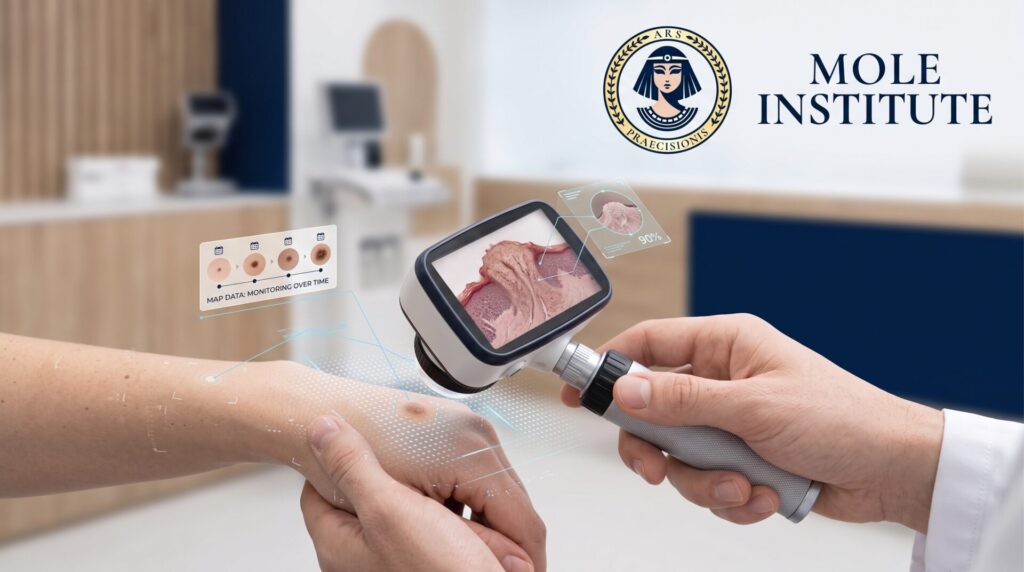
Noticing a new bump or texture on your skin can be unsettling. Whether it is a tiny rough patch on your hand or an unfamiliar, raised spot on your leg, your first instinct might be to worry. At the Mole Institute, we understand that sudden skin changes raise valid concerns. A quick glance in the mirror is not always enough to put your mind at ease.
That is why having a comprehensive guide to warts and other skin formations is so important. Warts are extremely common, but telling them apart from other, more serious skin conditions takes a trained eye. You deserve the peace of mind that comes from knowing exactly what is happening on your skin.
Our approach focuses on detection, not just observation. While most common skin growths are entirely harmless, a proactive strategy ensures nothing is left to chance. By actively mapping and monitoring your skin, you take control of your long-term health and step away from the anxiety of the unknown.
Key Takeaways
- Warts are common, non-cancerous growths caused by everyday viruses, but their appearance can easily mimic other, more serious skin issues.
- Self-checks are a great starting point, but professional skin mapping provides the definitive clarity you need.
- “Detection, Not Just Observation” means tracking microscopic changes accurately over time rather than just watching a spot and guessing.
- Creating a personalized planning schedule for routine skin checks is the best defence, especially for high-risk individuals.
- Knowing the difference between a harmless bump and a suspicious mole requires advanced clinical expertise.
What Are Warts and Why Do They Appear?
Warts are rough, non-cancerous skin growths that can appear anywhere on the body. They are caused by the human papillomavirus, a very common infection that only affects the top layer of the skin. They often look like small, grainy bumps and can sometimes feature tiny black dots, which are simply small, clotted blood vessels.
Understanding the origins of these growths is essential. According to the World Health Organization, skin viruses are easily transmitted through direct contact or shared surfaces. While they are usually harmless, their sudden appearance can be alarming, particularly if you have a history of heavy sun exposure or a family background of dermatological issues. Warts can take months to develop after the initial exposure, making their sudden visibility feel surprising.
Common Types of Warts
Not all warts look the same, which is part of the reason they can be so confusing to identify at home.
- Common Warts: Typically found on the fingers and hands, these have a rough, raised surface that can feel like a cauliflower texture.
- Plantar Warts: Appearing on the soles of the feet, these grow inward due to the pressure of walking and can be quite uncomfortable.
- Flat Warts: These are smaller, smoother, and tend to grow in large numbers, often appearing on the face or legs. They may be just one or two millimetres wide.
While these descriptions help, relying on them for self-diagnosis is risky. A spot that looks like a flat wart could, in fact, be an atypical mole or an early sign of a more serious issue.
Warts vs. Moles vs. Skin Cancer: Detection, Not Just Observation
It is incredibly easy to confuse a wart with a mole, a skin tag, or even an early-stage melanoma. Both warts and certain types of skin cancer can present as raised, textured spots that grow over time. This is where the principle of “Detection, Not Just Observation” becomes critical.
Sunscreen helps protect you at the beach, but proactive monitoring is what catches a dangerous spot before it becomes a life-altering diagnosis. The Canadian Cancer Society provides extensive information on non-cancerous tumours and conditions, highlighting how benign growths like warts are structurally different from malignancies. However, to the untrained naked eye, these differences are incredibly subtle.
If a spot bleeds, grows rapidly, or changes colour, it requires immediate attention. You should never assume a changing spot is just a stubborn wart.
When to Seek Professional Skin Mapping
If you are part of a high-risk group, relying on memory to track skin changes is not enough. Individuals with many moles, suppressed immune systems, or a history of significant sun exposure need clinical precision.
This is where advanced monitoring comes in. By utilizing Mole Institute Services, our team maps your skin down to the microscopic level. We create a baseline of your current skin health, allowing us to detect even the most minute changes year over year.
Understanding Your Unique Skin Profile Across Southern Ontario
Your environment and lifestyle play a massive role in your skin health. Whether you spend your weekends hiking the trails, working outdoors, or tending to your garden, your sun exposure adds up over the years. We serve patients across Southern Ontario, helping communities stay proactive about their dermatological health.
If you reside in Burlington and enjoy sunny days by the lake, or if you live in Oakville and frequently visit local parks, your skin is regularly exposed to UV rays. Even residents of Brantford taking walks along the Grand River, or those exploring the escarpment in Hamilton, need to be mindful of sun exposure. We also proudly support patients travelling from Grimsby who understand that specialized care is worth the short drive.
The Canadian Dermatology Association strongly recommends routine professional checks for anyone spending significant time outdoors. Your geographic location, combined with your personal medical history, shapes your unique skin profile.
The Importance of Personalized Planning
Skin care is never a one-size-fits-all process. What works for someone with a few freckles is entirely inadequate for someone with a family history of melanoma. Personalized planning means creating a monitoring schedule based precisely on your individual risk factors.
During a consultation, we evaluate your history, your daily routines, and your specific concerns. From there, we design a timeline for your skin mapping sessions. The Public Health Agency of Canada emphasizes that preventative health strategies must be tailored to the individual to be truly effective. A customized schedule ensures that you are seen exactly when you need to be, without unnecessary anxiety in between visits.
Taking Proactive Steps Today
You do not need to wait for a wart or mole to look suspicious before taking action. Establishing a baseline when your skin is healthy is the smartest move you can make for your future self.
Daily Habits for Optimal Protection
- Check your skin monthly for any new or changing spots.
- Take note of the texture, colour, and size of existing moles using a mirror in a well-lit room.
- Protect your skin with tightly woven clothing, wide-brimmed hats, and a high-SPF sunscreen when outdoors.
- Stay informed about your family’s dermatological history, as genetics play a significant role.
When to Take Action
Understanding the true nature of a wart is comforting, but the ultimate goal is comprehensive skin safety. If you have a growth that you are unsure about, do not attempt to treat it at home with harsh over-the-counter chemicals. These can sometimes damage the surrounding tissue or irritate a spot that actually requires specialized medical analysis.
For expert guidance on recognizing dangerous dermatological changes, organizations like Melanoma Canada offer fantastic public resources on what to look for. However, reading about symptoms online can never replace a professional evaluation.
Do not let uncertainty dictate your peace of mind. By committing to routine professional checks, you are taking a definitive step toward long-term wellness.
Conclusion
Your skin is your body’s largest organ, and it deserves specialized, respectful care. While warts are generally harmless, distinguishing them from more dangerous conditions is a job for the experts. At the Mole Institute, our commitment to “Detection, Not Just Observation” ensures that you have a clear, personalized planning strategy for your future. If you have noticed a new spot, a changing mole, or simply want to establish a baseline for your skin health, reach out to us today. Let us help you protect your health with confidence, accuracy, and clarity.